For Buyers • For Sellers • Real Estate Market Updates & Insight • January 12, 2023

January 2023 Real Estate Market Update

The close of 2022 brought the housing market extremes of the last year into sharp focus. With decreased sales, generally increasing inventory, and lower prices, the December market finally seemed to hit the winter slowdown that has characterized typical market cycles of years past. This stands in contrast to the early months of 2022, which saw sky-high prices and scarce inventory before the threat of inflation and rising mortgage rates caused the shift in the latter half of the year.

Windermere Chief Economist Matthew Gardner commented on this phenomenon. “The local housing market in 2022 ended with a whimper rather than a bang. Overall, the housing market is going to continue falling off the artificial ‘sugar high’ that was a function of the artificially low mortgage rates during the pandemic,” he said.

This is not necessarily a bad thing, as stability in the market could translate to more predictable price appreciation for sellers and better circumstances for buyers to enter the market. In most cases, it’s low- and middle-priced homes that are missing from the market, so many first-time buyers still have plenty of pent-up demand for inventory that meets their needs and financial situations.

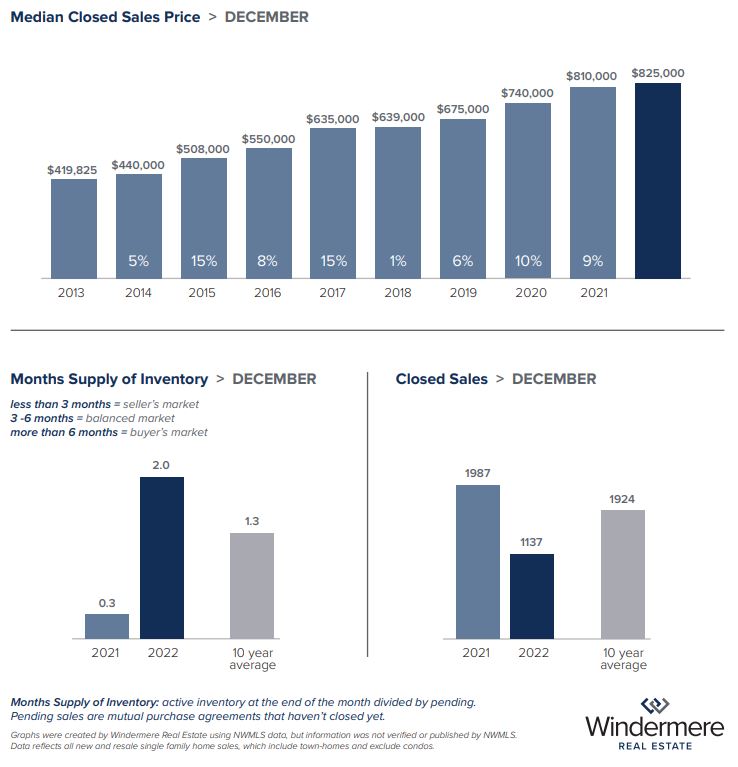
Despite a 43.3% drop in closed sales compared to December 2021, last month saw the median price for single-family homes in King County rise to $825,000. That’s up from the median of $810,000 this time last year. This could speak to the lingering effects of inflation on the market or be a factor in the lack of entry and mid-level homes currently available to buyers.

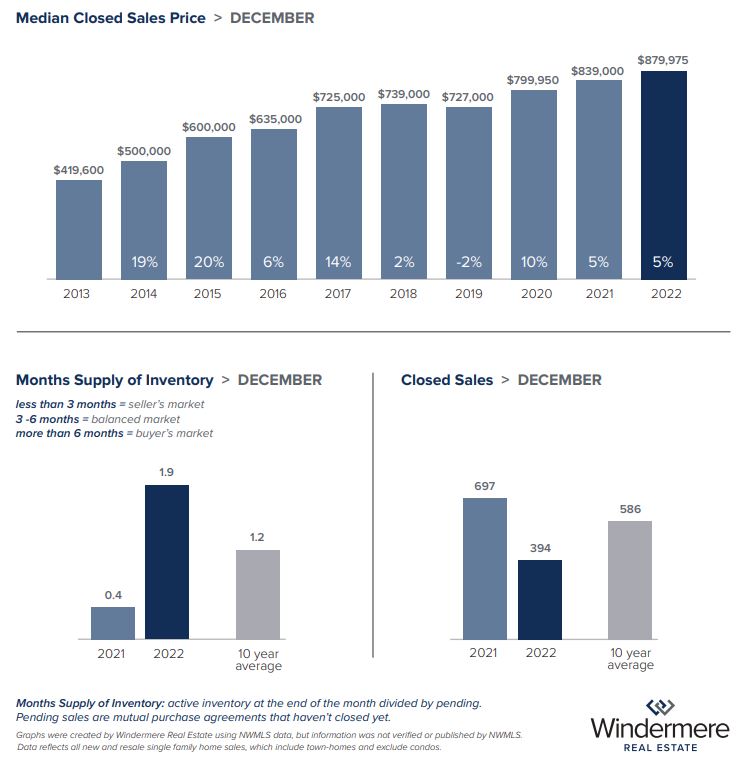
The Seattle market experienced the same pattern, with a year-over-year price increase of almost 5%, from $839,000 in December 2021 to $879,975 last month. Closed sales were down in the city as well, dropping 43.5% from last year to just 394 units, leaving the market with just under six weeks of inventory. The condo market mimicked this trend, with the median price rising to $512,500 last month, up from $490,000 in December 2021. Additionally, Seattle condos offered the highest amount of inventory, with 2.5 months of stock.

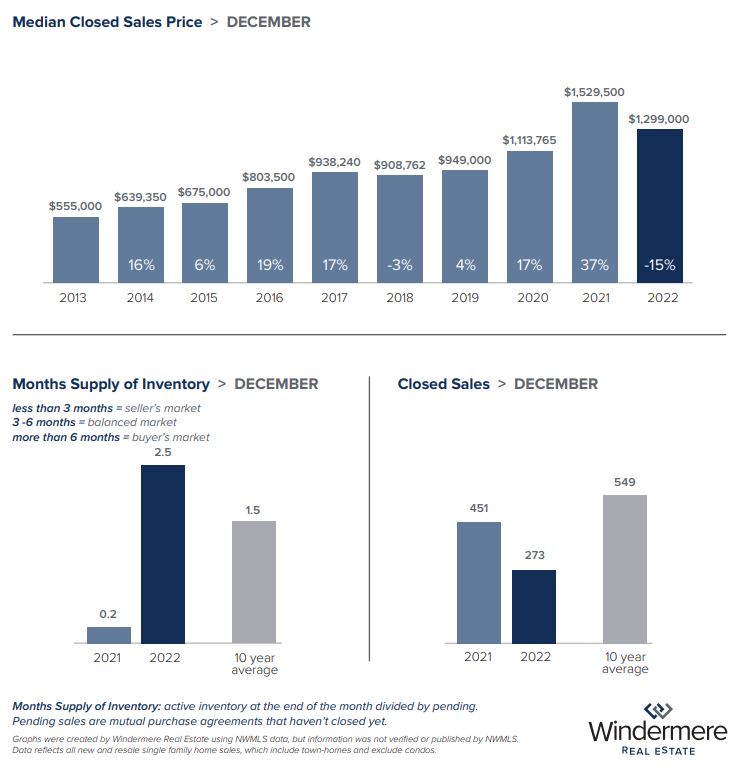
Things were a little different on the Eastside, which had experienced perhaps the highest price boom during the “sugar high” of the pandemic. There, single-family home prices decreased around 15% year-over-year, landing at a median of $1,299,000 last month, compared to $1,529,500 in December 2021. This is likely due to higher mortgage rates dampening the buying power of potential homebuyers in the area. Entry-level buyers may be forced to look in more affordable markets for the time being, and December’s 39.5% decrease in closed sales compared to December 2021 reflects this. Interestingly, Eastside condos experienced a sold price increase to a median of $565,000, up from $550,000 last year. This is likely because condos are a much more affordable entry point to the Eastside market and may be experiencing higher demand as buyers tailor their expectations to the current market conditions.

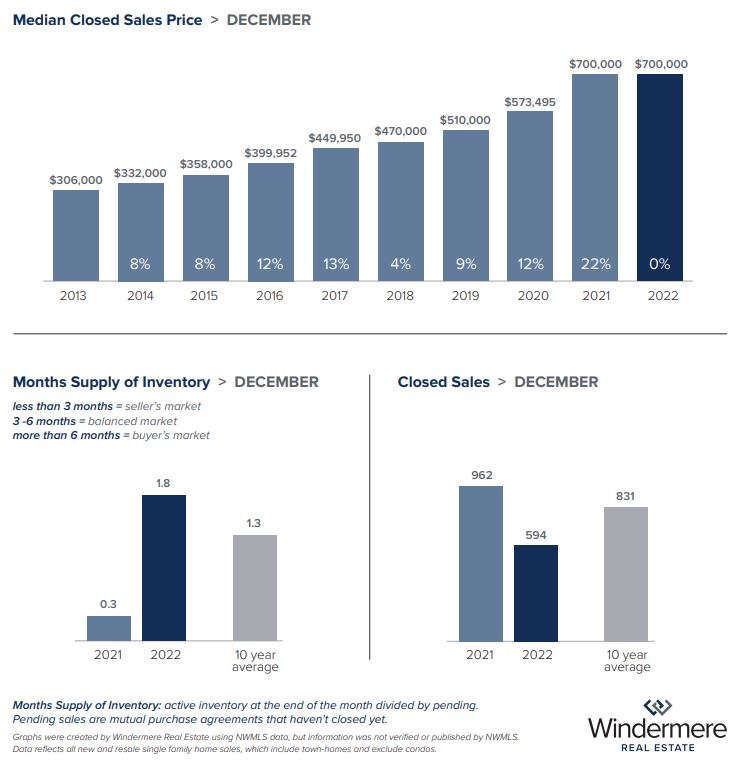
After the ups and downs of the last year, Snohomish County ended exactly where it began, with a median single-family home price of $700,000 — the same as in December 2021. Closed sales in the area were down 38.3%, leaving the market with about six weeks of inventory. Throughout the pandemic, Snohomish County has been a relatively stable market compared to the fluctuations of Seattle and the Eastside, making it a desirable area for first-time buyers and those looking to maximize their buying power.

Looking ahead, Matthew Gardner expects 2023 will see continued price declines. However, “With mortgage rates expected to fall from current levels slowly, sale prices should start increasing again in the second half of the year,” he said.

Gardner continued, “Ultimately, once prices pull back to where they would have been if the pandemic had never occurred, they will start to stabilize and then return to a more normalized pace of appreciation.”

Sellers and buyers have certainly felt the impacts of shifting economic conditions on the housing market. A slower market pace and modest price decreases may be necessary to help reset expectations on both sides and set up sustained future success.

If you have questions about how to make the most of the current market conditions, give Kari a call.


EASTSIDE
VIEW FULL EASTSIDE REPORT


KING COUNTY

VIEW FULL KING COUNTY REPORT


SEATTLE

VIEW FULL SEATTLE REPORT


SNOHOMISH COUNTY

VIEW FULL SNOHOMISH COUNTY REPORT


This post originally appeared on GetTheWReport.com.
Kari's Blog • Real Estate Related • Tips & Tricks • December 21, 2022

Upsize Your Home and Your Business With These Ideas

Growing a business is a great thing, but when it becomes too big for your current home, you may feel overwhelmed. Figuring out the logistics of running a business from your home can be tricky, and when you don’t have enough space to store inventory or to create an office with privacy, both you and your business will suffer. If you’ve been thinking about upsizing your home in order to grow your business the right way, this guide will help you take the necessary steps without all the stress by providing stellar tips and resources. Ready to look at properties? Check out our available listings to get started.

Follow these tips when you’re ready to upsize your home and grow your business with confidence:

Do Some Research

Choosing the right home for both your personal and professional needs can take some time, so it’s important not to skimp on the research. Check out neighborhoods, paying close attention to the number of small businesses there as well as things like how well the schools are rated and how much crime is reported in the area. Make a list of features you can’t live without in a new home, such as space for an office or a side door that will allow you to welcome clients for meetings in privacy. Take a look at the average sale prices for homes in the areas you like so you’ll have a good idea of how much you’ll need for a down payment.

Prepare for the Move

Moving to a bigger home can be a dream come true in many ways, but it can also be an added stressor if you’re not well-prepared for everything that comes with it. Start by prepping the business for a relocation, which might include sending out a mailer to your customers or clients letting them know about the move and the dates your business will be affected. You can also obtain any necessary change-of-address forms from the post office, your bank, and any other company that will need your new business location. It may be helpful to visit the new house, if possible, and draw up a layout that will help you and the movers easily see where certain items will go on moving day.

Build Up Your Confidence by Going Back to School

Now that you have a bigger home and the opportunity to focus on growing your business the way you want, it might be helpful to build up your confidence as an entrepreneur. With a bigger business comes more responsibility, after all, and it can be challenging to shoulder it all, even if you’re meeting your goals. Consider returning to school for a degree in business, accounting, management, or communications, which will allow you to run things efficiently no matter how much you grow. With a business bachelor’s degree program online, you can learn while continuing to work and take care of the move.

Find the Right Home Warranty

With a bigger home, a bigger business, and bigger goals for both your personal and professional needs, it’s a good idea to take steps to protect it all. A breakdown of your electrical, plumbing, or HVAC system will be costly to fix and could affect your business in multiple ways and leave you scrambling to make repairs while dealing with your customers. With a home warranty, you can cover those systems plus your appliances, which aren’t covered by homeowner’s insurance because they fall outside of the categories of theft, damage to the structure, and injuries. This renewable contract will give you peace of mind year after year, both for your home and for the sake of your business.


Upsizing your home in order to grow your business comes with a lot to think about, both as a homeowner and an entrepreneur, so give yourself plenty of time to plan. Consider going back to school to build your confidence and look for a home warranty that will offer protection when you need it most.


Photo via Pexels

This post was initially written by a guest blogger, Ray Flynn.

Real Estate Market Updates & Insight • December 12, 2022

December 2022 Real Estate Market Update

As temperatures drop and we approach the end of the year, the local housing market has remained somewhat sluggish — an indication of a return to normal seasonality. Slower home sales are not necessarily a bad sign; in many cases, causes as benign as the holidays and inclement weather have pushed buyers off their path, with many choosing to wait for the new year before resuming their searches.

The market is still experiencing high-interest rates, though many experts agree we seem to be past peak inflation levels. While the 30-year interest rate recently dropped to 6.49% from the peak of 7.08%, it remains about a point above the June 2022 average of 5.42%. Windermere’s Chief Economist Matthew Gardner expects mortgage rates will continue to drop. “Early in the new year, I expect the Fed to start pulling back from their aggressive policy stance, and this will allow rates to begin slowly stabilizing,” he says. Gardner expects interest rates to remain above the 6% mark until the fall of 2023 when they should begin to dip.

Interest rates and weather are not the only things causing buyers to slow their trajectory. The larger amount of inventory in most markets has encouraged buyers to take their time and browse more than they’ve been able to in the past two years. Sellers must now compete with one another for buyers’ attention and offers. That said, listings priced accurately for the market are still attracting showings and strong offers. Plus, many sellers can afford to wait for the right offer.

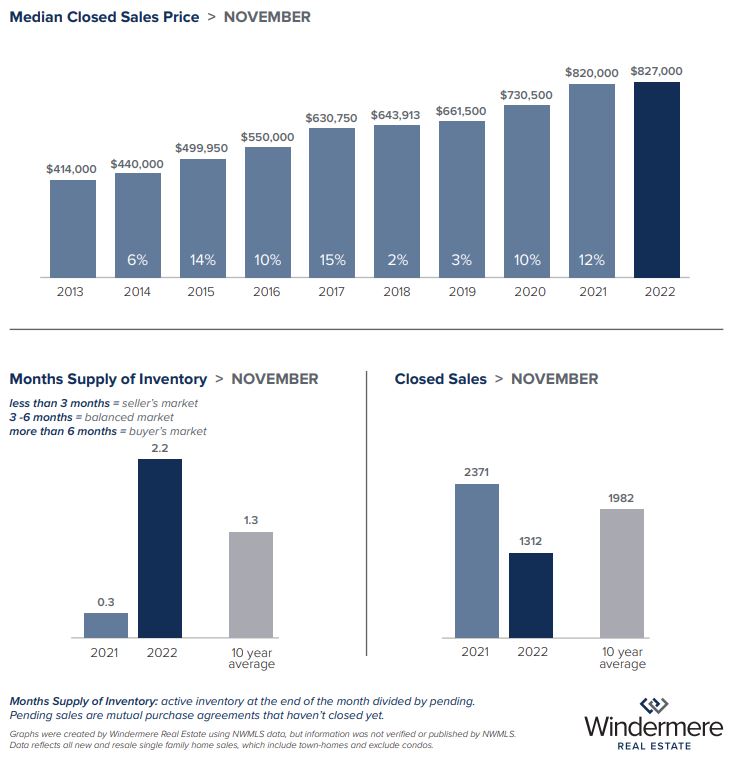
These trends were reflected across King County in November, with a median sold price of $827,000 for single-family homes. That’s up from $820,000 in October, but the more noticeable change was in the number of closed sales. The county saw a 44.7% year-over-year drop in the number of sold units, dropping from 2,371 closed sales in November 2021 to just 1,312 closed sales last month.

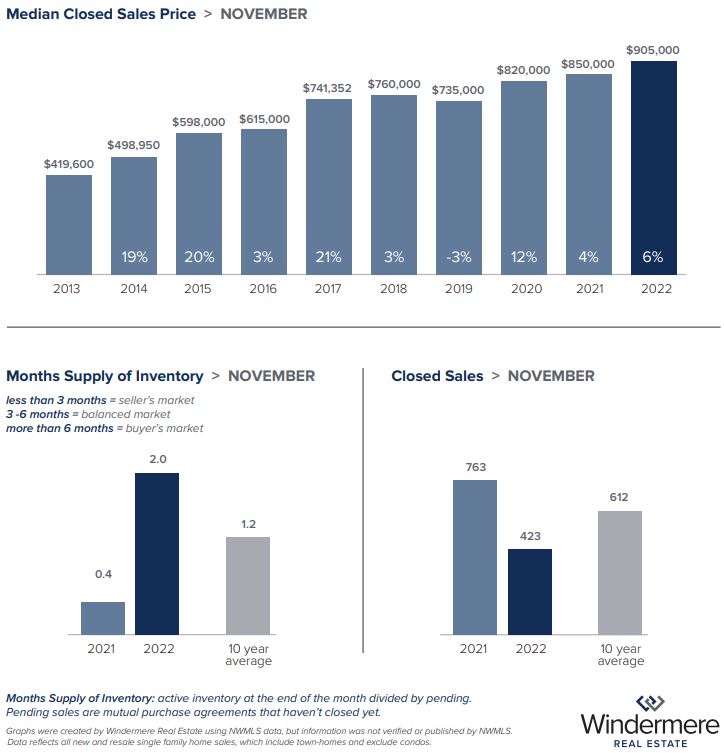
Seattle followed much the same pattern, with a median closed sale price of $905,000 for single-family homes, up from $850,000 the same time last year. Closed sales also decreased from 763 in November 2021 to 423 last month, a drop of 44.6%. Condos in the city experienced an even greater decrease in sales, with a 54% year-over-year dip in sold units.

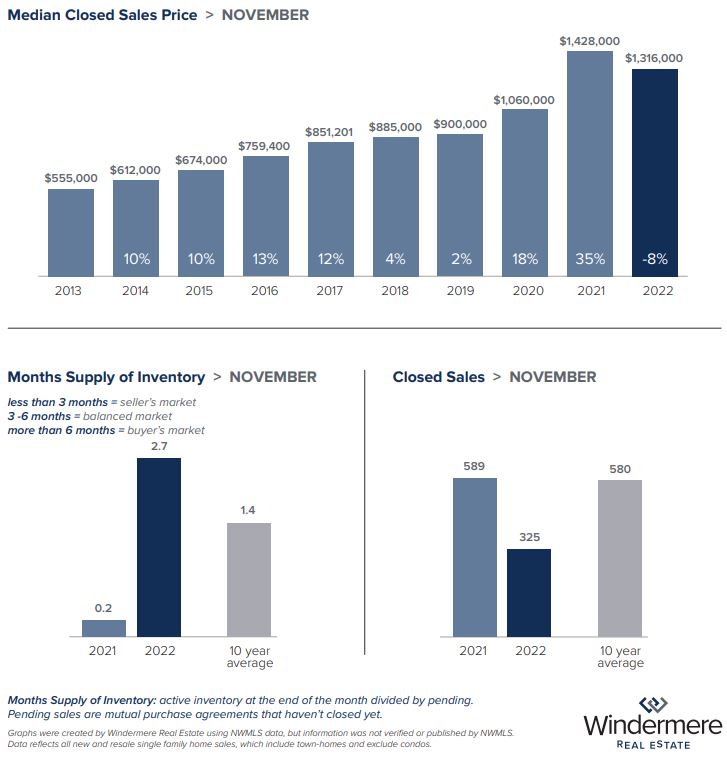
Prices on the Eastside decreased to a median of $1,316,000 for single-family homes after holding steady at $1,350,000 since August of this year. The inventory for Eastside single-family homes currently sits at 2.4 months. Condo prices in the area rose from $555,500 in November 2021 to $569,500 last month. Eastside buyers may opt for condos as a more affordable choice, given the current interest rates. Condo inventory in the area currently sits at two months.

Last month just 10% of residential units on the Eastside sold above the asking price. More than half the listings on the Eastside experienced price reductions in November as well, with 54% of sold listings having had a price adjustment at some point. Despite these recent trends, it’s important to note that median home prices on the Eastside are up 24% over the past two years — from $1,060,000 in 2020 to $1,316,000 last month.

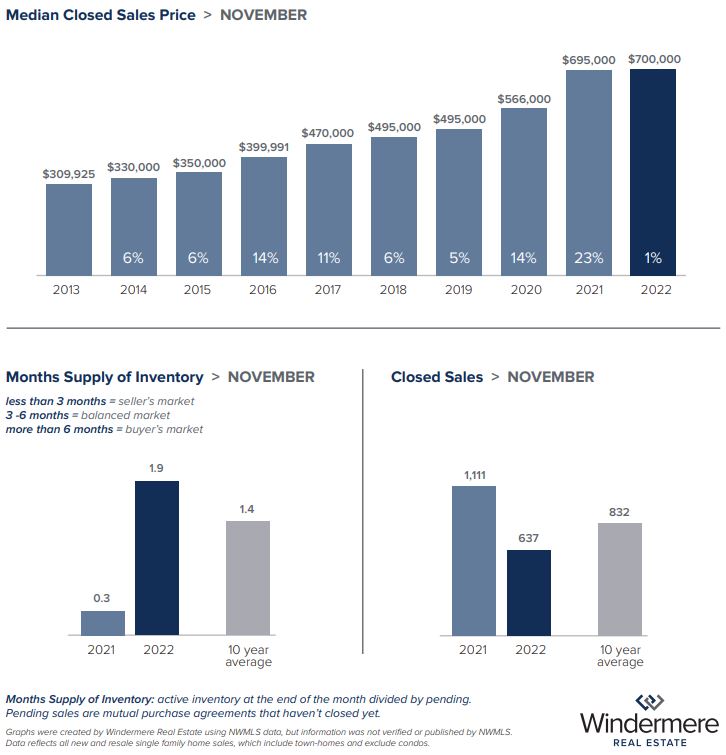
Snohomish County remained somewhat similar to last month, with slightly less than two months of inventory on single-family homes and a median sold price of $700,000. That’s up slightly year-over-year from $695,000 in November 2021. Condos in Snohomish County had the least inventory of any area, with only 1.6 months’ supply.

Although interest rates are higher than we’ve grown used to over the past two years, the increased inventory means it is still a great time for buyers, especially first-time homebuyers, to enter the market. Resources provided by the Washington State Housing Finance Commission, including its free homebuyer education seminars and its down payment and closing costs assistance programs, can help counter some obstacles that may keep buyers sidelined. A savvy combination of interest rate buy-downs, adjustable rate mortgages, and the possibility of refinancing for lower rates can also help would-be buyers hit the ground running.

If you have questions about what this market means for you, please reach out to Kari for assistance.


EASTSIDE

eastside december market update

VIEW FULL EASTSIDE REPORT

KING COUNTY

King county december market update

VIEW FULL KING COUNTY REPORT

SEATTLE

seattle december market update

VIEW FULL SEATTLE REPORT

SNOHOMISH COUNTY

snohomish december market update

VIEW FULL SNOHOMISH COUNTY REPORT


This post originally appeared on GetTheWReport.com.

For Buyers • For Home Owners • For Sellers • Real Estate Market Updates & Insight • Real Estate Related • November 15, 2022

November 2022 Real Estate Market Update

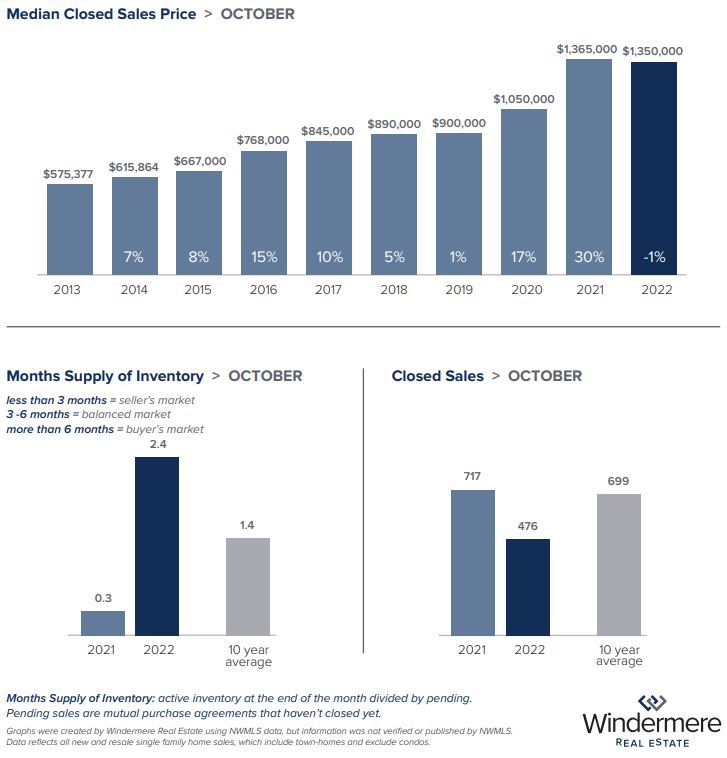
As the final quarter of 2022 rolls on, it’s clear that these last months will be anything but typical for home buyers and sellers in King and Snohomish counties. In a real estate market that’s been defined by high competition and low supply for the last number of years, buyers and sellers are changing tactics as market dynamics shift due to rising mortgage rates and growing inventory.

While some buyers are waiting to see if rates and home prices drop, others are getting creative with their financing by utilizing buydowns, adjustable rate loans, carrying back second deeds of trust, and closing cost allowances to make their purchases. Sellers have been slower to adjust, with many resisting the idea of lowering their asking price to meet the constraints of buyers dealing with high-interest rates. However, for sellers willing to correctly market and position their listing, successful sales – and even occasionally multiple offers – can still be attained.

Seattle & King County

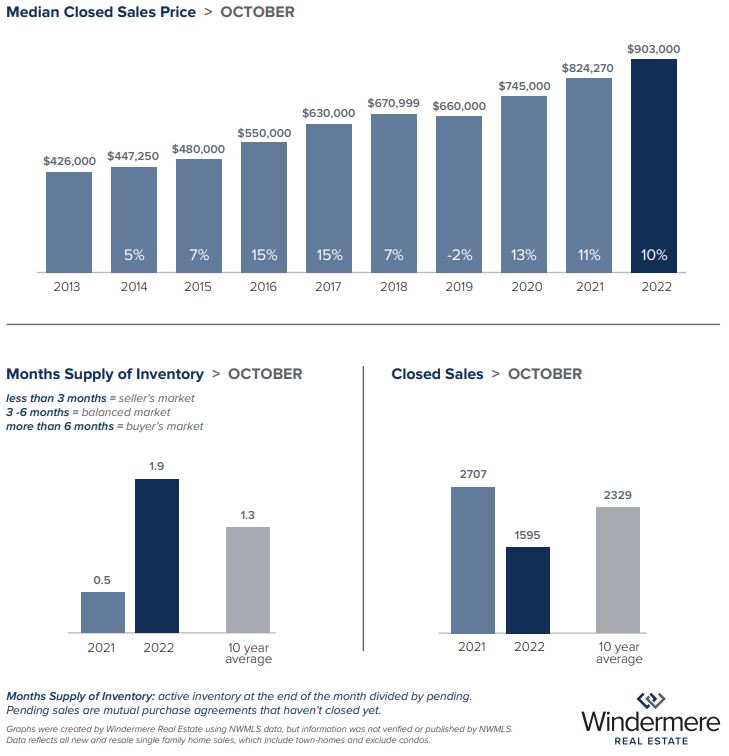
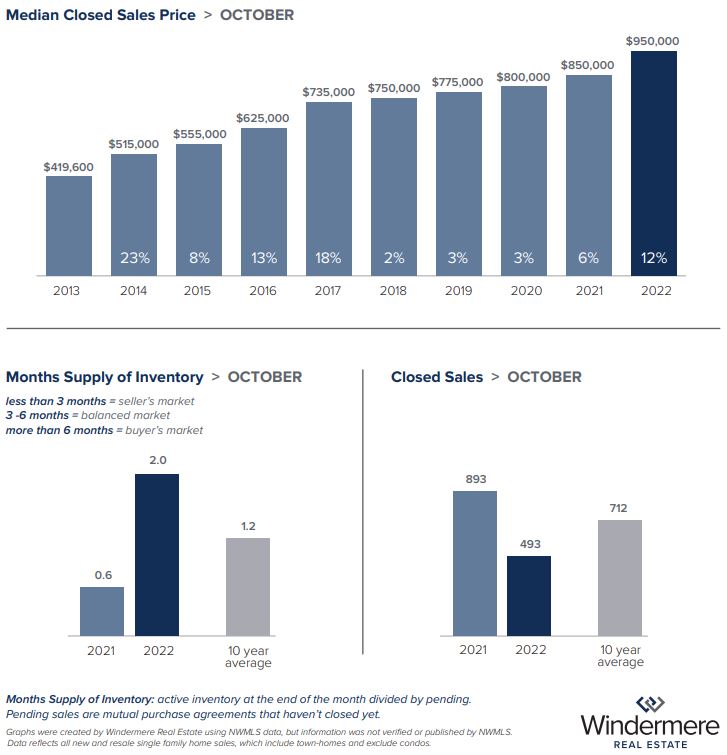
King County as a whole saw the median price of a single-family home increase from $875,000 in September to $903,000 last month. This was primarily a function of price gains in Seattle, where single-family homes sold for a median of $950,000 in October — up from $900,000 in September. Seattle and King County both have about two months of available supply, which is the most balanced inventory level the market has seen in years. The Seattle condo market has slowed a bit more than residential sales, with over 3 months of inventory and a median price of $522,500 — down from $525,000 year-over-year.

Eastside

On the Eastside, the median price for single-family homes has remained constant, sitting at $1,350,000 for the third month in a row. The average monthly mortgage payment on the Eastside dropped 19% from $9,226 in April 2022 (when the median price was $1,722,500 with a 4.98% interest rate) to $7,430 in August 2022 (with a median price of $1,350,000 at a 5.22% interest rate). However, while the median price has remained the same since August, the 30-year interest rate rose to 6.9% in October. At that rate, the average monthly payment is $8,891 — only 4% off the peak payment of $9,226 in April; this is despite a 22% drop in prices since then.

Snohomish County

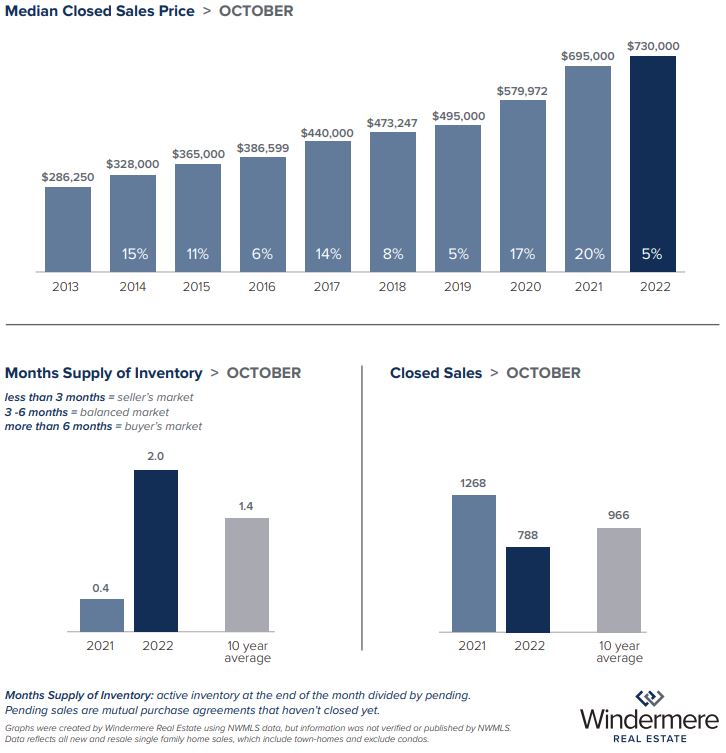
Snohomish County saw prices fall slightly from a median of $735,000 for single-family homes in September to $730,000 last month. With less than two months of inventory, that market remains slightly more competitive than the Eastside or Seattle, possibly due to lower prices making it more accessible for buyers as they combat the higher interest rates.

Matthew Gardner’s Take

Windermere’s Chief Economist Matthew Gardner weighed in on the effect of mortgage rates on buyer behavior. While he believes many buyers may be forced to wait (either voluntarily or not) for interest rates to stabilize, he advises would-be buyers not to wait for prices to bottom out. “Those who hope to pick up a home ‘on the cheap’ are likely in for a long wait,” he said.

For many buyers, the answer to this conundrum is a pivot to adjustable rate mortgages, which are currently set at around 5.9%. With the 30-year fixed mortgage rate currently at 6.9% or higher, adjustable rate mortgages offer a more affordable inroad to homeownership, with the possibility of refinancing to a lower rate in a few years.


As we navigate these changing market conditions, Kari can help you assess the best path forward for your home sale or purchase.


EASTSIDE

VIEW FULL EASTSIDE REPORT

KING COUNTY

VIEW FULL KING COUNTY REPORT

SEATTLE

VIEW FULL SEATTLE REPORT

SNOHOMISH COUNTY

VIEW FULL SNOHOMISH COUNTY REPORT


This post originally appeared on GetTheWReport.com.
Real Estate Market Updates & Insight • Real Estate Related • October 27, 2022

Q3 Western WA 2022 Gardner Report

The following analysis of the Western Washington real estate market is provided by Windermere Real Estate Chief Economist Matthew Gardner. We hope that this information may assist you with making better-informed real estate decisions. For further information about the housing market in your area, please don’t hesitate to contact Kari.

REGIONAL ECONOMIC OVERVIEW

The Western Washington labor market continues to expand. The addition of 110,000 jobs over the past 12 months represents an impressive increase of 4.9%. All but seven counties have recovered completely from their pandemic job losses. In total, the region has recovered all the jobs lost and has added an additional 30,000 new positions. The regional unemployment rate in August was 3.8%. This is .2% higher than at the end of the second quarter. That said, county data is not seasonally adjusted, which is likely the reason for the modest increase. The labor force has not expanded at its normal pace, which is starting to impact job growth. Although the likelihood of a recession starting this winter has risen, Matthew Gardner is not overly concerned; however, he anticipates businesses may start to taper hiring if they feel the demand for their goods and services is softening.

WESTERN WASHINGTON HOME SALES

❱ In the third quarter, 19,455 homes traded hands, representing a drop of 29.2% from the same period a year ago. Sales were 15.4% lower than in the second quarter of this year.

❱ Listing activity continues to increase, with the average number of homes for sale up 103% from a year ago and 61% higher than in the second quarter of 2022.

❱ Year over year, sales fell across the board, but when compared to the second quarter they were higher in Mason, Cowlitz, Jefferson, and Clallam counties.

❱ Pending sales (demand) outpaced listings (supply) by a factor of 1:6. This ratio has been dropping for the past three quarters and indicates a market moving back toward balance. The only question is whether it will overshoot and turn into a buyer’s market.

Q3 2022 western WA gardner report - annual change in home sales

WESTERN WASHINGTON HOME PRICES

Q3 2022 western WA gardner report - mortgage rates map

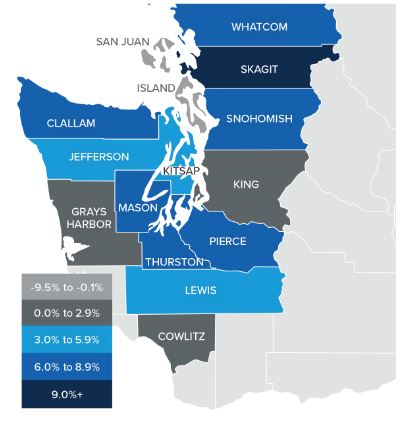
❱ Higher financing costs and more choices in the market continue to impact home prices. Although prices rose an average of 3.6% compared to a year ago, they were down 9.9% from the prior quarter. The current average sale price of a home in Western Washington is $748,569.

❱ The change in list prices is a good leading indicator and we have seen a change in the market. All but two counties (Island and Jefferson) saw median list prices either static or lower than in the second quarter of 2022.

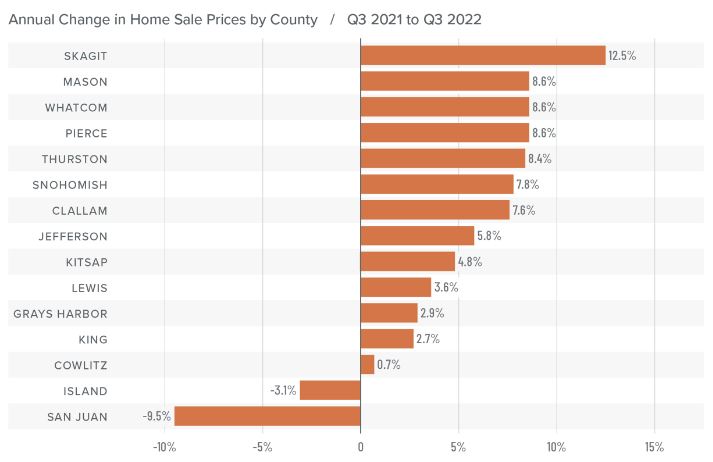
❱ Prices rose in all but two counties, and several counties saw price growth well above their long-term averages.

❱ With the number of homes for sale rising and list prices starting to pull back, it’s not surprising to see price growth falter. We are going through a reversion following the overstimulated market of 2020 and 2021. There will be some ugly numbers in terms of sales and prices as we move through this period of adjustment, but the pain will be temporary.

Q3 2022 western WA gardner report - annual change in home price

MORTGAGE RATES

❱ This remains an uncertain period for mortgage rates. When the Federal Reserve slowed bond purchases in 2013, investors were accused of having a “taper tantrum,” and we are seeing a similar reaction today. The Fed appears to be content to watch the housing market endure a period of pain as they throw all their tools at reducing inflation.

❱ As a result, mortgage rates are out of sync with treasury yields, which not only continues to push rates much higher but also creates violent swings in both directions. My current forecast calls for rates to peak in the fourth quarter of this year before starting to pull back slowly. That said, they will remain in the 6% range until the end of 2023.

DAYS ON MARKET

❱ It took an average of 24 days for a home to sell in the third quarter of the year. This was seven more days than in the same quarter of 2021, and eight days more than in the second quarter.

❱ King and Kitsap counties were the tightest markets in Western Washington, with homes taking an average of 19 days to sell.

❱ Only one county (San Juan) saw the average time on the market drop from the same period a year ago. San Juan was also the only county to see market time drop between the second and third quarters of this year.

❱ The greatest increase in market time compared to a year ago was in Grays Harbor, where it took an average of 13 more days for homes to sell. Compared to the second quarter of 2022, Thurston County saw the average market time rise the most (from 9 to 20 days).

Q3 2022 western WA gardner report - average days on market

CONCLUSIONS

This speedometer reflects the state of the region’s real estate market using housing inventory, price gains, home sales, interest rates, and larger economic factors.

Listings are up, sales are down, and a shift toward buyers has started. After a decade of sellers dominating the market, it is far too early to say that the shift is enough to turn the market in favor of buyers, but the pendulum has started to swing in their direction.

A belief that the housing market is on its way to collapsing will keep some buyers sidelined, while others may be waiting for mortgage rates to settle down. Whatever their reasons, Matthew Gardner maintains that we will see a brief period where annual price growth will turn negative in several markets, but it is only because the market is normalizing. He certainly doesn’t see any systemic risk of home values falling as they did in the mid-to-late 2000s.

ABOUT MATTHEW GARDNER

Matthew Gardner - Chief Economist for Windermere Real Estate

As Chief Economist for Windermere Real Estate, Matthew Gardner is responsible for analyzing and interpreting economic data and its impact on the real estate market on both a local and national level. Matthew has over 30 years of professional experience both in the U.S. and U.K.

In addition to his day-to-day responsibilities, Matthew sits on the Washington State Governors Council of Economic Advisors; chairs the Board of Trustees at the Washington Center for Real Estate Research at the University of Washington; and is an Advisory Board Member at the Runstad Center for Real Estate Studies at the University of Washington where he also lectures in real estate economics.


This post originally appeared on the Windermere.com Blog.

For Buyers • For Home Owners • For Sellers • Real Estate Related • Tips & Tricks • October 17, 2022

How to Make Moving to a New State Hassle-Free

Moving to a new state is a big adjustment and can be draining. However, having the right information can make it less challenging. Here are some tips from Kari Haas Real Estate Team on how to make moving to a new state hassle-free and help you make the transition as smooth as possible.

Find a Job

If you’re moving to a new state, you’ll need to find a job in your new location. Check out job boards or networking in your new city to find job openings. Your job search should start with finding who needs your skills in the new state. Also, update your resume and cover letter to match the new job market. And if you’re moving to a new state, make sure you find information about the cost of living, as well.

Start a Business

Starting a new business in a new location can be daunting. Here are the steps to follow:

  • Get familiar with laws and regulations. Research the laws and regulations regarding starting a business in a specific state.
  • Choose a business location. Pick a convenient location that suits your budget and needs.
  • Craft a business plan. Create a detailed outline of the services or products you’ll be selling, how to structure the business, your financial projections, and funding options for your new business.
  • Create a plan of action. Craft a plan of action to follow since starting a business can be chaotic. If possible, create a team and delegate tasks.

Also, don’t forget about marketing! A lot of your advertising can be done through social media platforms, which will save you lots of money. However, you should also spend some time on content marketing, which means generating interest in a topic rather than simply advertising a specific product. This is a great way to build your customer base from the ground up, and Cornerstone Content can help you get started.

Adjust to the New Location

When you first move to a new state, it can be difficult to figure out where everything is. Take the time to familiarize yourself with your new surroundings. Explore your new city and find things to do that you enjoy. Consider joining social groups in your new state and making friends. You’ll also need to adjust to the weather in the new location.

Ready To Move?

Moving can be challenging but it’s also an exciting opportunity to start a bold new chapter of your life. Also, you can greatly reduce stress by doing some simple research and preparation beforehand. Research the job market, familiarize yourself with your new setting, and you’ll feel right at home in no time!


Kari Haas Real Estate Team exudes a passion for real estate that carries through to every client. Call 206-719-2224


Image via Pexels.

This post was originally written by Lisa Walker and was submitted exclusively to KariHaas.com

For Buyers • For Home Owners • For Sellers • Investing • Real Estate Market Updates & Insight • Real Estate Related • October 12, 2022

October 2022 Real Estate Market Update

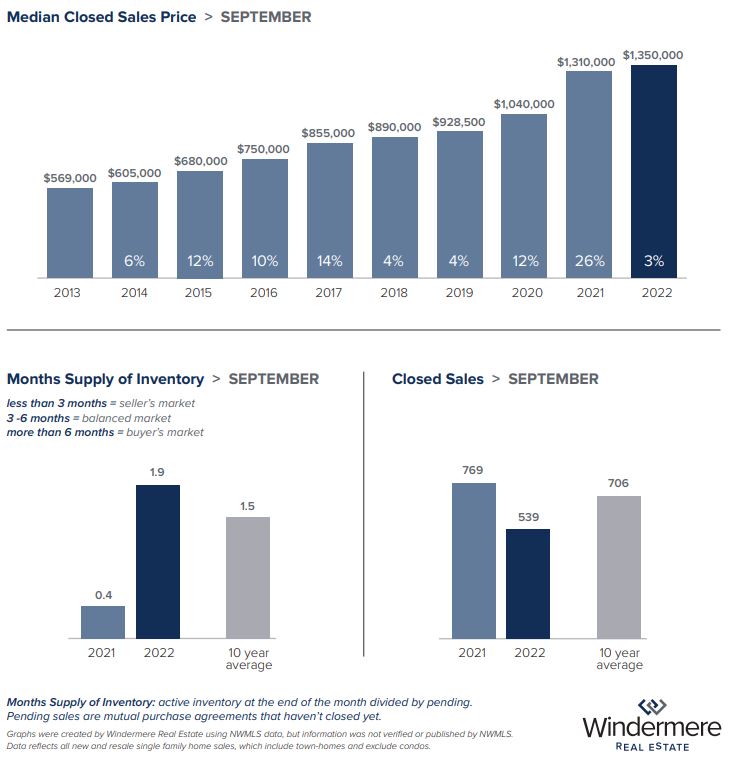
Increasing listings inventory, lengthening time on the market and a slowdown in home price increases across the Puget Sound region herald a return to normalcy and better opportunities for buyers. According to September data from the NWMLS, active listings nearly doubled from a year ago, with pending sales declining by about 31%.

“The ‘Great Reversion’ continues, with the number of homes in the tri-county market of King, Pierce, and Snohomish counties up 106% from a year ago,” says Windermere’s Chief Economist Matthew Gardner. “It’s worth noting that current inventory levels in King and Snohomish counties are still around 13% lower than they were in September 2019 prior to the pandemic-induced market shift.”

While the recent sales data may be pointing to a market shift of a different sort, they may reflect some normal seasonal trends as well. October is typically an average selling month, with November typically performing about 76% as well as an average month, and December and January slowing even further as the holidays and end of year pull some buyers from their home searches.

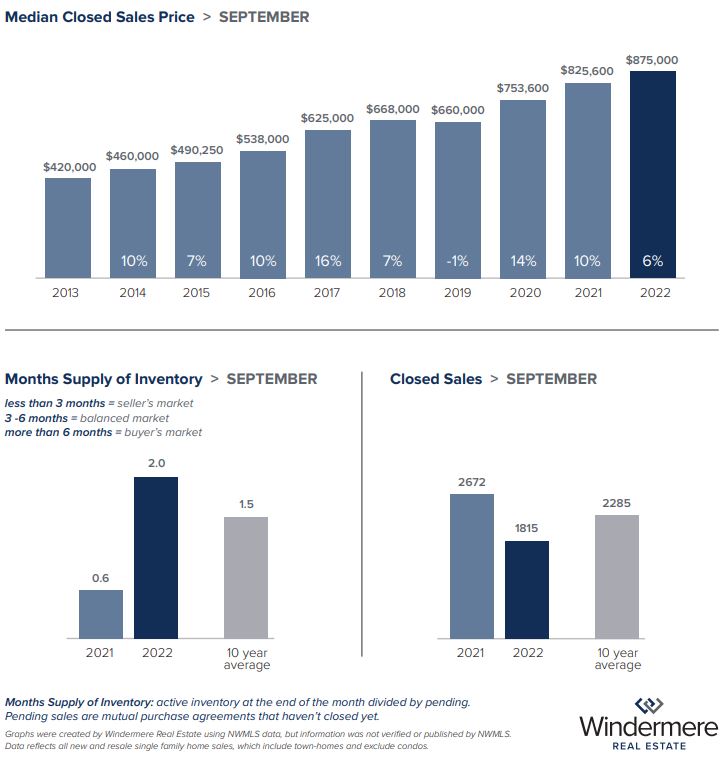
That being said, last month still saw year-over-year price increases in Puget Sound’s busiest metros, despite some month-over-month price dips. King County single-family homes saw a price decrease from $899,999 in August to $875,000 last month. That’s still up from last September’s median price of $825,600, and condos also saw year-over-year price increases, from $466,501 last September to $483,000 this September. With about two months’ inventory for both housing types, King County buyers are better able to take their time and consider the details of their purchase.

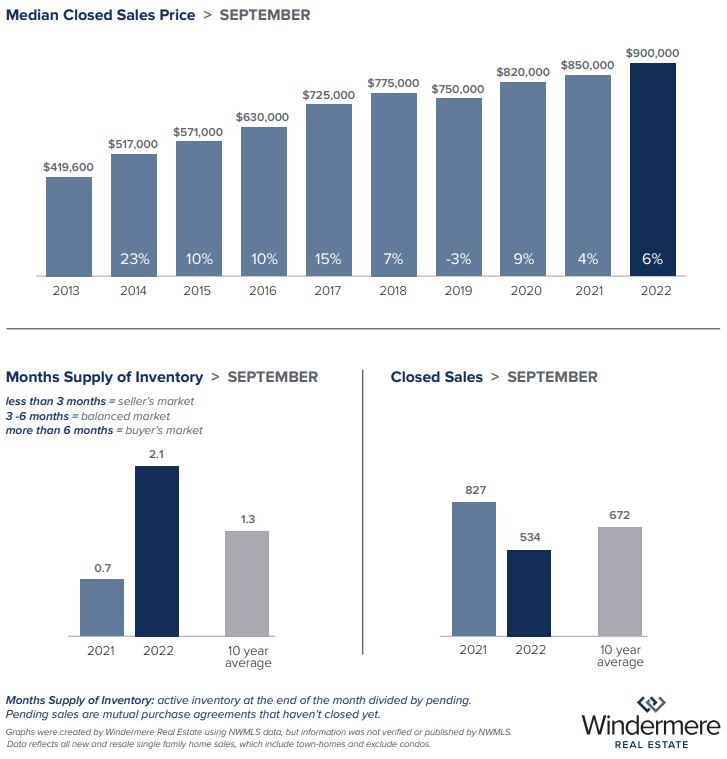
Seattle also saw a slight month-over-month decrease in single-family home prices, from a median price of $927,000 in August to $900,000 last month. That’s still up six percent from $850,000 in September 2021. Conversely, year-over-year condo prices slumped a bit, falling to $499,000 last month from $505,000 in September 2021. Condo inventory has also increased, with buyers benefitting from over two months’ supply. Sellers are encouraged to price wisely and accurately to beat the competition in these conditions.

The Eastside was the only area to see prices stay the same month-over-month, with the median price for a single-family home remaining constant at $1,350,000. That’s an increase from the median price of $1,310,000 in 2021. Active inventory also increased, up to 1.9 months’ supply. The last time the Eastside had this many listings (approximately 1,200) was before the pandemic in 2019.

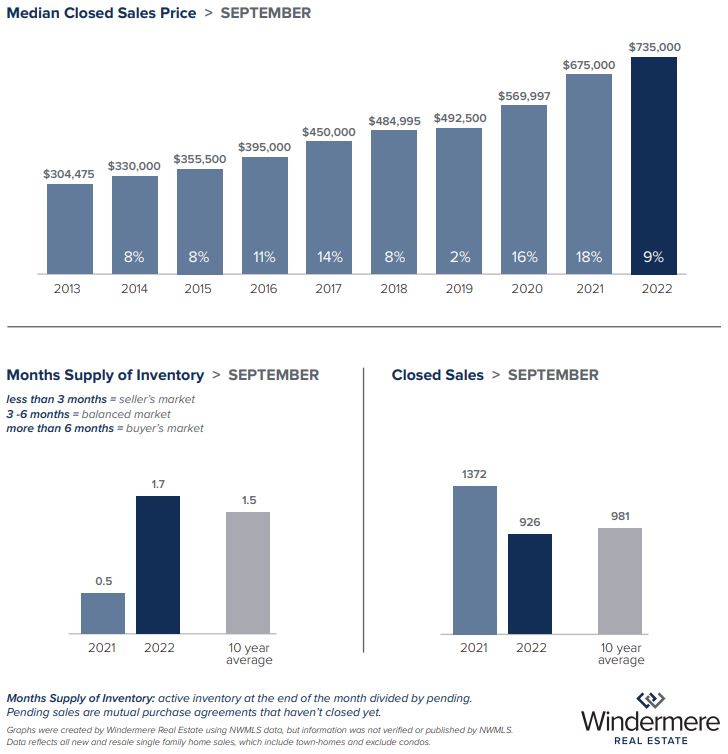
Snohomish County followed Seattle and King County, with prices dropping slightly to a median of $735,000 for single-family homes last month — down from $749,000 in August. Inventory was slightly tighter in the area, with about 1.75 months’ supply, though it’s still an improvement over the tight inventory at the height of the pandemic.

Many buyers are feeling a bit of a “pandemic hangover” when it comes to interest rates, which may be contributing to the increase in inventory across the region. The conditions that led to the historic low-interest rates were unprecedented, and buyers now need to be willing to consider buying at a higher rate with the goal of refinancing later on if they’re able.

The future of the local market will be dictated by fluctuations in interest rates. If rates increase from the September average of 6.11%, real estate experts expect new pending sales to continue to be 25% – 30% below the prior year in units. Median closed sale prices will roughly decline 10% for each 1% increase in interest rates. However, if interest rates decline from the September average, we can expect pending sales to increase, prices to remain flat, and active inventory to decline more than normal.

Matthew Gardner also points out that home prices “remain positive compared to a year ago.” He doesn’t expect this to change by the end of 2022. By spring, however, Gardner believes “it’s likely that year-over-year prices will start to trend negative. That said, I firmly believe that this will only be a short period of correction, so homeowners in the Puget Sound area shouldn’t be too concerned, especially given that 64% of them are sitting on over 50% of home equity.”

If you have questions about how home inventory or inflation could impact your position in the real estate market, please call the Kari Haas Real Estate Team. 


EASTSIDE

VIEW FULL EASTSIDE REPORT

KING COUNTY

VIEW FULL KING COUNTY REPORT

SEATTLE

VIEW FULL SEATTLE REPORT

SNOHOMISH COUNTY

VIEW FULL SNOHOMISH COUNTY REPORT


This post originally appeared on GetTheWReport.com.
For Buyers • For Home Owners • Investing • Real Estate Related • September 27, 2022

What to Ask Your Financial Planner Before Buying a Home

US home prices continue to rise in 2022. Just last March, prices spiked at a rate of 20.6%, making it the highest year-over-year price change in over 35 years. With rapid home price surges across 20 different US cities, it’s crucial for aspiring homeowners to consult with financial planners to better navigate the pressures of enlarged home values. That being said, demand for personal financial advisors has likewise increased; their employment rate is even set to grow by 15% in the following years. As formal finance education now focuses on investment strategies and securities analysis, planners can make informed recommendations according to your income, debt, and credit history. This advice will help you manage the potential risks and returns when purchasing a house. For instance, finding the right mortgage can help homebuyers retain a decent part of their gross income, and meet future maintenance and repair costs better.

The questions you ask your financial planner before purchasing a house can lead to a more well-rounded decision. We’ve listed below the four questions you need to start with.

1. How much can I actually afford?

Mortgages are quite costly and can affect your plans of buying your dream home. As it stands, a $300,000 loan, for example, can require you to pay $1,734 a month. Now although financial calculators prove beneficial in planning your budget, they aren’t enough. It’s important to seek advice from a financial planner on how much you should save for house costs. Consulting a professional is especially relevant if your budget oversees non-negotiable costs like student loan debt. Financial planners can identify your debt to income ratio, which is used when you apply for a mortgage, and suggest how much you should borrow — this way you don’t have to stretch your budget thin.

2. What type of mortgages can I pick from?

Your financial planner can present a selection of mortgages that are proportional to your financial situation. Below are some of the mortgages you can apply for:

Conventional loans

These loans require a strong credit score and come in two types: conforming and non-conforming. Conforming loans, specifically, follow a set of standards for loan size, debt and credit created by the Federal Housing Finance Agency. Most areas have a loan limit of $647,200, while expensive locations go up to $970,800, so it’s best to talk to your planner to know how much you can take out for your home — especially if you want to purchase a house in expensive areas.

Government-backed loans

FHA, USDA, and VA are among a few examples of this loan. There are varying conditions for each, like how much money should be put down, and your planner can see if you qualify for these loans. Typically, VA or USDA loans need high credit scores, whereas FHA loans require much steeper down payments. Also, if you aren’t within a low-to-moderate income level or don’t prefer a home in rural areas, your advisor might warn against taking out a USDA mortgage.

3. How much do home insurance policies go for?

Alongside your mortgage plan, financial planners make sure you get the right insurance coverage for your needs. Insurance plans should correspond to the type of coverage your house requires, and planners can base them on the home’s past claim history and physical condition, as well as its location. On average, the cost of homeowners insurance policies in the US amount to $1,312 annually for a $250,000 dwelling coverage amount. If you live in disaster-prone areas, however, insurance premiums can rise up to 12.1%. Ultimately, home insurance policies differ across different houses, so speak to your planner about which coverage best suits you.

4. Should I place my home in a trust?

Houses are large purchases that double as assets. Consult your financial planner about having your home protected through an estate plan (which transfers any legal responsibility of your assets to trusted loved ones). In particular, trusts enable you to pass down your home to another. Depending on your home’s value, planners can recommend whether a trust is beneficial for you. A house worth $160,000, for instance, can be included in a trust. Trusts are ideal if you’re buying an expensive home, as they prevent your family from undergoing probate court to contest homeownership rights. If you’re worried that placing your home under a trust means losing control over the property, don’t be. As your financial planner will affirm, a trustee can choose how and when their beneficiary will inherit the house.

Finding your Financial Advisor with Kari Haas

The Kari Haas Real Estate Team works closely with a trusted Financial Advisor and has connections and referrals for you in all steps of the home buying/selling process. Give Kari a call to be connected with one of our highly recommended service providers.


Article exclusively submitted to karihaas.com

Written by Rita Janine

Image via Pexels

For Buyers • For Home Owners • For Sellers • Kari's Blog • Real Estate Related • Tips & Tricks • Upgrades & Renovations • September 19, 2022

Fix It Up and Sell It: A Senior’s Guide to House Flipping

Believe it or not, retirement doesn’t suit everyone. In fact, some people simply enjoy working while others want to earn a little extra cash. That’s where house-flipping comes in. It can be an extremely profitable side gig for seniors willing to invest time and money. If you’re curious about learning more, you’re in luck. Kari Haas has some tips and resources to help you get started in the house-flipping business. Continue reading for a Senior’s Guide to House Flipping.

Finding Your Ideal Property

To find your ideal property, start by:

Finding a Mortgage

There are several options when it comes to finding a mortgage. FHA 203 (K) is a type of government-insured mortgage that allows a borrower to take out a loan for the property’s purchase and renovation costs. Other options include a VA renovation loan, HomeStyle loans, and a CHOICE Renovation loan. The Kari Haas Real Estate Team has trusted mortgage brokers to assist you in finding the right fit for you.

Caution Is the Name of the Game

The primary purpose of buying a fixer-upper home is to save money on the purchase price. Still, it doesn’t always work out as expected due to unforeseen repairs and necessary renovations. When searching for a property to renovate, look out for certain red flags, such as structural damage or dry rot. Add 20% to your estimate, particularly for major repairs, such as electrical work, HVAC upgrades, foundation problems, or issues with mold or asbestos.

Formalize Your Business as an LLC

When starting a house-flipping business, consider forming a limited liability company (LLC). This business entity offers benefits when it comes to filing taxes and helps shield you from personal liability. Each state has its own rules and procedures for setting up an LLC. In most cases, it’s easy and affordable and can often be done online.

Now that you’re legitimately structured and ready to operate as a going concern, you’ll need to take initial necessary steps to get up and running. This includes drafting a business plan, setting a budget, and developing a marketing strategy. This strategy should involve digital marketing on social media, which in today’s day and age is essential. Fortunately, you don’t have to be a technological wiz; in fact, these days, you can easily design banners online then let them do the work for you. With free online templates, you’re able to customize and share posts in no time.

Renovations to Boost Value

Homes & Gardens notes that there are several options to add value to your property through renovations. For instance, you can upgrade the kitchen lighting or hood range over the cooking surface, or add insulation to the attic to make the house more energy-efficient.

Some renovations, such as kitchen remodels, add more value to a property than others. Remodeling a kitchen requires a competent plumber, especially if you plan to have pipes repaired or replaced. Plumbing services typically cost between $45 and $150 per hour. Before hiring, always take a close look at reviews and insist on only working with licensed and insured professionals.

If you plan to hire contractors for repairs or renovation projects or a property manager, it’s important to set up a payroll system before contacting them. Keep in mind that there are many payroll software options; just be sure the platform you choose offers automatic payroll scheduling, as well as automatic calculating and tax filing, in addition to same-day direct deposit and the ability to manage employee benefits.

Selling Your Fixer-Upper

When the time comes to sell your fixer-upper, find a real estate agent who’s as invested in selling your home as you are. When searching for one, ask for referrals from people you trust. Set a realistic sale price using a home estimate tool.

House Flipping in Your Senior Years

House flipping is an exciting side gig, and if done correctly, it can be considerably rewarding financially. If you can avoid the pitfalls, employ the right professionals, and deal with the finances, you can enjoy all the benefits of house flipping in your senior years.

Whatever your real estate needs, Kari Haas can help you reach your goals with confidence. Call 206-719-2224.


This post was written by guest blogger, Lisa Walker.

Image courtesy of Unsplash

For Buyers • For Home Owners • For Sellers • Kari's Blog • Real Estate Market Updates & Insight • September 15, 2022

September 2022 Real Estate Market Update

After its breakneck pace over the last two years, it appears the housing market has finally reached a soft bottom to the price corrections that began in April of this year. Reports that we’re entering a bear market are generally exaggerated, however, as the market seems simply to be resetting to a more balanced state where buyers and sellers are at last on more equal footing. Perhaps as much as anything, the market’s performance in August reflects a typical pattern for a month that has traditionally been a slower time for housing sales.


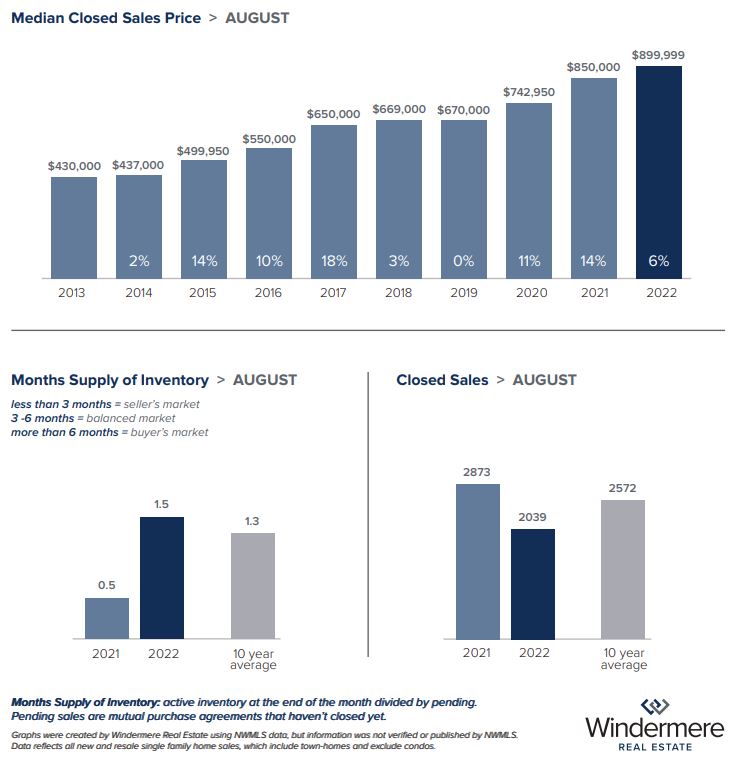
In King County last month, available inventory declined slightly to 1.5 months’ supply, with the median home price of $899,999 up slightly over July’s median of $890,000. That’s also an increase of 5.8% from $850,000 in August 2021. With 57% of homes selling in under two weeks and 22% selling over list price, many King County home buyers still have to move quickly and competitively, although with more leverage than they had earlier this year thanks to recent supply increases.


The Eastside had slightly higher levels of housing inventory available, at about 1.6 months. The median sold price for single-family homes rose 4% year-over-year, to $1,350,000. The higher asking prices in this area mean fewer homes are selling over asking than in Seattle, with about one in four homes selling at or over list price. Condos remain a more affordable option in this highly desired area, with the median price for an Eastside condo sitting at $569,500 last month.


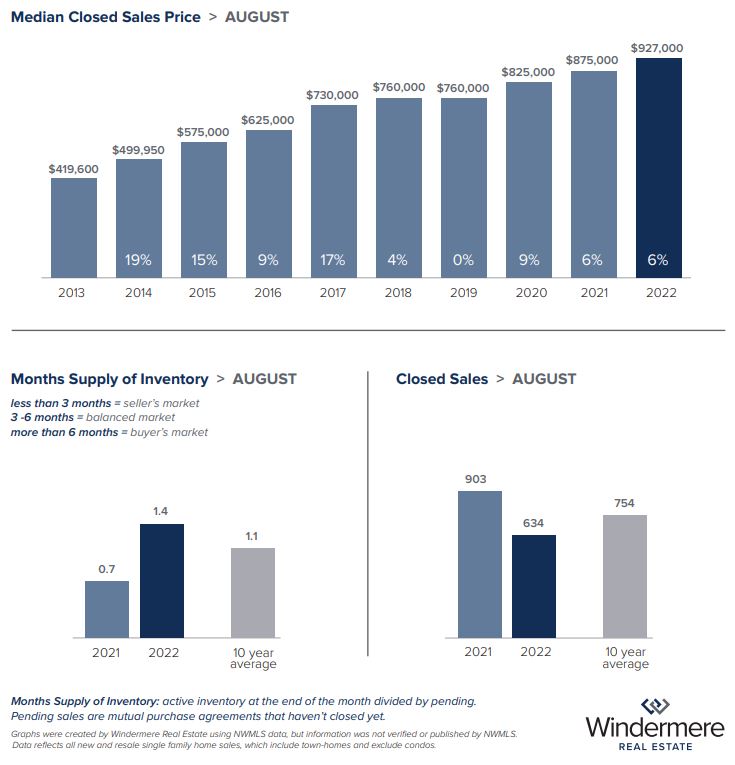
Seattle has slightly less supply than King County as a whole, sitting around 1.4 months of inventory. The median sold price for single-family homes was up 6% year-over-year, at $927,000. About 65% of single-family homes in the city sold within two weeks, while 26% of homes sold above list price. With 2.4 months of inventory, condos may offer buyers an easier way to break into the market. The median sold price for condos last month was also a more affordable $520,000, though that’s still up 8.3% year-over-year. Increasing rents in the city and across the Puget Sound region are driving some buyers into the market, as homeownership is a hedge against inflation and rising rent costs. Even with that in mind, sellers still need to price accurately to avoid their homes sitting on the market for too long.


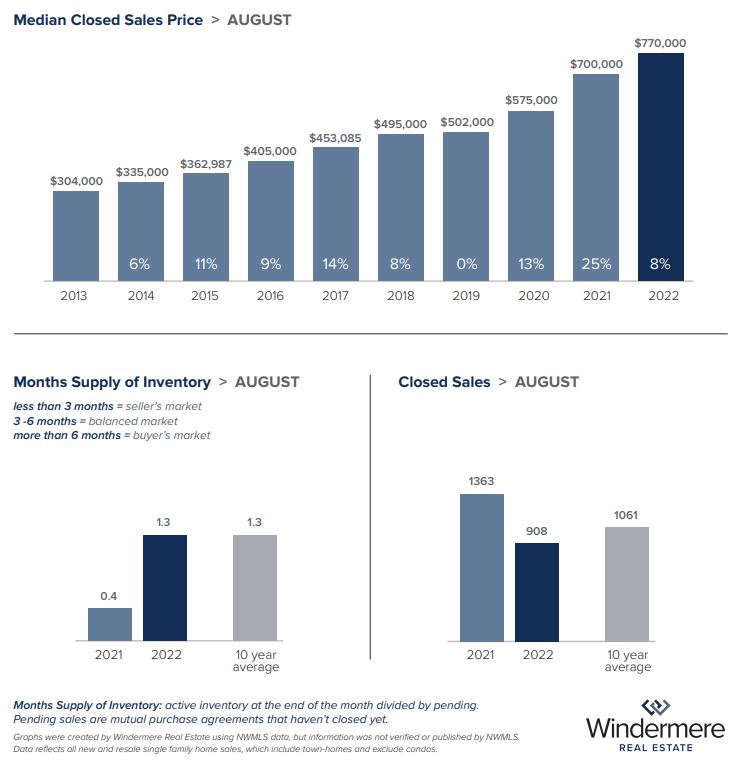
Snohomish County had the lowest inventory level at 1.3 months of supply (which is still more than the county’s average the past few years). The median sold price for single-family homes was $749,999, which is up 8% from August 2021. Just over half of the available homes sold within two weeks, and 19% sold over list price. The median price for condos in Snohomish County fell almost 5% year-over-year, landing at $474,999. This area continues to be a draw for buyers who may be priced out of the Seattle and Eastside markets.


Windermere’s Chief Economist Matthew Gardner believes the decrease in prices is a sign we’re entering a more typical housing market than we’ve seen in the last few years. “Home sales increased month-over-month, but the rise in listings is causing prices to soften,” he said. “I predict prices will drop further as we move into the fall. The market is simply reverting to its long-term average as it moves away from the artificial conditions caused by the pandemic.”


EASTSIDE

VIEW FULL EASTSIDE REPORT


KING COUNTY

VIEW FULL KING COUNTY REPORT


SEATTLE

VIEW FULL SEATTLE REPORT


SNOHOMISH COUNTYsept 2022 real estate market update kari haas

VIEW FULL SNOHOMISH COUNTY REPORT


This post originally appeared on GetTheWReport.com